Going international without shortcuts
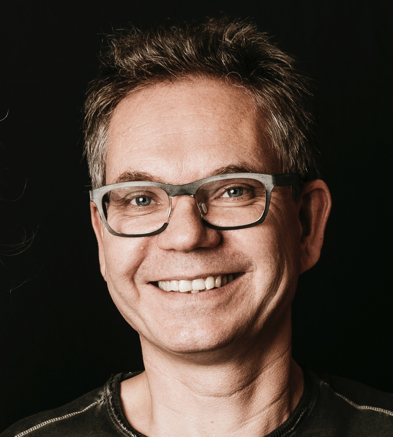 Maarten Laruelle
 Last Tuesday (03/06/2026) at the Startup Awards, Julie Dumoulin from Spotable and Aline Muylaert from Go Vocal sat down with Robin Wauters to talk about international expansion.
What made this panel interesting for me was the contrast between the two companies. Go Vocal has been around for ten years building engagement platforms for local governments, while Spotable is in their second year, started with software for roofers and is now expanding into facades, windows, and doors. Two very different markets, stages and speeds, but when it came to the question of how you actually expand internationally, they expressed similar conclusions.
Two speeds
Go Vocal had the luxury of building their international approach over time. From day one they knew Belgium would be too small, so they set up an international team in Brussels, hired interns from target markets, and did all their marketing in English even though most customers needed Dutch or French. After their Series A, COVID pushed them to shift from bringing international people to Brussels toward hiring locally in each market. As of then they went remote first, local country managers aka boots on the ground.
Spotable had no such luxury, or did not have the patience ;). They launched in September, and by January they had 150 roofing companies on the platform. Then in three days, 50 new companies signed up with double the usual budget. That kind of traction forces decisions. Julie had to figure out whether to wait until her European team could run itself, or start building US presence while still managing everything else. She chose the latter, which meant figuring out on the fly what kind of team she needed and how to even begin. Her approach was simple but intensive: she spent a week calling everyone she knew who had done US expansion. Founders who moved there, scale-ups who had tried it, anyone with experience. Not to copy a playbook, but to understand what she was getting into. The advice she got was contradictory. Some said send your five best people from Belgium, while others said Americans only buy from Americans. In the end, she had to make her own call.
The shortcut that doesn’t exist
Aline was blunt about partner models. Go Vocal tried resellers and local partners in multiple countries, but none of it worked. The deals that closed were the ones where the founders showed up themselves. In year two, she was constantly driving to the Netherlands and the UK, not because she had a system, but because there was no substitute for being there.
Julie had a similar experience with export agencies like Flanders Investment & Trade. Helpful for admin, legal work, setting up a company structure, not helpful for actually getting meetings (which is logic, as that is not their mission). As she put it: nobody at those agencies knows roofing companies or construction materials distributors. They can help you with paperwork, but for the actual selling you’re on your own.
The learning here isn’t that partners or agencies are useless, it’s that they can’t replace you in the parts that matter most. The first conversations, those first deals, the understanding of what actually works in a new market, that has to come from you and you have to learn from it. You can systematize it later, but you can’t skip the founder-led phase.
The US puzzle
Both founders named the US as their most difficult market.
Go Vocal’s challenge was finding the right country lead. They’re on their third one now, and Aline said she’s great, but the first two didn’t work out. That’s years of iteration just to get the team piece right.
Julie is earlier in that journey. She wanted to be there herself, boots on the ground, closing the first deals. But she also can’t abandon Europe. So she’s trying to do both, which she admitted isn’t easy.
What surprised me was Julie’s take on hiring. She’s worked with both American and Belgian engineers, and her view is that Belgians are as good or better. Better education, better systems, better ways of working. The big US tech names pull talent, but the actual quality isn’t higher, and American hires cost more. Her point wasn’t nationalistic, it was practical: if you’re a Belgian startup building a US team, you don’t automatically need Americans. Belgians who speak English can do the job.
Aline also mentioned Germany as a difficult market. Slow to digitalize, she remembered meetings with no wifi where you had to plug in an ethernet cable, but once you get references there, it compounds. It just takes longer than you’d want.
What makes it possible
Go Vocal’s mission is to rebuild trust in democracy and government. It sounds abstract, but she said it’s the reason they can build a cohesive team across countries and cultures. When people are intrinsically motivated by the same thing, nationality matters less. You can have half the team across the Atlantic and still have a shared culture.
The flip side is also true. If you don’t have that kind of mission, international expansion becomes pure logistics. You’re coordinating people instead of leading a movement. That’s harder to sustain.
What I took away
What works is being present, showing up or just calling. Calling people who’ve done it, driving to markets yourself before you can afford to delegate and making decisions with incomplete information because waiting isn’t an option.
Both Julie and Aline have the same willingness to figure it out themselves, that is why they are successful and on stage. Julie afterwards told me that this was one of the very few of these kinds of appearances. Their focus is on their clients and prospects and all their attention goes to that.
Julie Dumoulin is co-founder of Spotable. Aline Muylaert is co-founder of Go Vocal (formerly CitizenLab). This panel was moderated by Robin Wauters at the Startup Awards of Belgium Startup Ecosystem in Brussels.
Expanding internationally and wondering if your pricing travels with you? Let’s talk.