Recap Off-The-Radar Brussels: the build is cheap now, the bill becomes the strategy
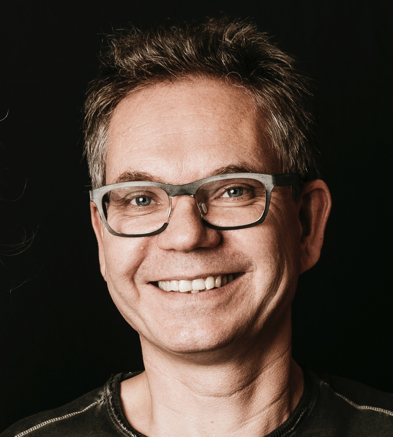 Maarten Laruelle
 I missed the entire first quarter of Off-The-Radar, and that was on me. Belgian traffic got me to Mix ten minutes late, and the event was strict: once a session starts, nobody gets in. I tried anyway, and I was not gracious about it. The young guy at the door told me, in English that was not his first language, that he could not think for himself. Not my finest moment, I said it back to him, something like, you can’t think for yourself, that’s dangerous, and went to wait it out. He deserves an apology, so here it is. He also, by accident, delivered the line of the day. A room full of people building machines to think for us, and the one human at the door apologising for not doing it himself.
When they finally let me in, I found a couple of hundred people in Brussels who can build almost anything. Off The Radar, 23 June, at Mix, organised by Tanguy Goretti and friends from Hexa. One stage, headliners only, no badge sponsors, off the record, dinner after. The line-up was the kind you normally have to fly somewhere for: Mistral, Anthropic, OpenAI, Stripe, Cloudflare, ElevenLabs, Google DeepMind, alongside Belgian and European builders like TechWolf, Wonderful, Gradium, Linkup and Vertical Compute. Laurent Hublet, the Brussels minister for the economy, opened it with Tanguy, which tells you something about who is paying attention now.
I went as the pricing person in a room full of engineers, though that is only half of why I was there. I’m also building Tsjirpa 2.0, an attempt to turn the pricing method I run with founders into an agent that does the work itself, and that builder hat, with the help of my loyal Claude, is how I talked my way into the room in the first place, because getting on the list was hard. So I was watching the day from both sides, the person who thinks about value capture for a living and the person now sweating his own token bill. When the cost of building something collapses to near zero, where does the value go, and who ends up paying for it? By the end of the day I had my answer, and it was not the answer the demos were selling. The building is the cheap part now. The bill, and the judgement about what is worth building in the first place, is where the whole AI space has moved.
From prompt engineers to loop designers
The clearest signal of how fast work itself is changing came from two very different stages. Katia Gil Guzman from OpenAI put it most bluntly: we are not engineers anymore, we are loop designers. She showed Codex running for ten hours straight against a set of 150 evaluation prompts, rewriting prompts, ranking logic and context retrieval on its own, doing things she said she would never have thought of. The shift she described is from telling the tool what to do to specifying what you want and letting it figure out the route. You stop prompting the agent and start designing the loop that prompts the agent. She quoted Peter Steinberger on exactly that line.
Jeroen Van Hautte from TechWolf told the same story from the inside of a company rather than a lab. People had quietly started using coding tools for everything that was not code. Product managers were writing their PRDs in Cursor while marketing was drafting copy in it. So TechWolf ran a two-day bootcamp for eight people, and six of them turned into genuine power users within weeks. The fear of missing out got so strong that people were at his desk every morning asking for the next round. Instead of running it again, they recorded and transcribed the whole thing and fed it back as context, then turned their Slack history into a walkable Pokémon-style map of the company culture. That is the loop-designer mindset applied to onboarding, not coding.
And then, during the morning break, a kid walked on stage. He had downloaded Claude Code two months ago and built Tetris 40K on the first night, a Warhammer take on Tetris with pieces that destroy columns and a Warp Storm that recolours the board, and he has built several games since. He engaged the whole room and got the biggest applause of the day, which is not easy in a crowd that builds for a living. Two months from install to shipping games, and he was the youngest person there, not the last who will work this way.
The token bill, and who absorbs it
Jeroen said the thing nobody on a vendor stage will say out loud. Some of TechWolf’s customers blew through their entire yearly token budget by February. Finance came chasing, asking whether they had turned it off. They had not, because the engineers would revolt if anyone tried. So TechWolf launched a token benchmarking community, the way salaries get benchmarked: companies pool what they spend, and you can finally see whether your usage is normal or insane. TechWolf made its own data public. The deeper move was in how they think about it. They have stopped asking which function or which person is spending, and started asking what work the tokens are buying. Spend per unit of work, not per seat.
For two decades we priced by the seat, because cost-to-serve was basically flat and a user was a clean proxy for value. Now the cost of delivering your product is usage-based, volatile, and rising. Jeroen reckons we will all spend ten times more on tokens next year. Your customer, meanwhile, still wants to sign an annual contract with a number they can put in a budget. Somebody has to absorb the gap between a flat price and a variable, climbing cost, and right now most founders are absorbing it without deciding to.
The infrastructure people are quietly building the tools to shrink that bill, which tells you where they think the pressure is. Cloudflare’s Ade Oshineye showed “code mode,” which collapses a pile of MCP tools into two and can cut token consumption from an agent’s context by something like 99 percent. He also described an execution ladder: once you have evaluations, you can slide a task down to a cheaper model, or all the way down to a plain workflow, trading quality for cost on purpose. Phil Mizrahi from Linkup has built the same idea into his web-search product, a whole range of endpoints sitting along the quality-versus-latency frontier, from a sub-second answer to a deep researcher you let run for half an hour.
My take: this is the most important pricing shift of the decade and almost nobody is treating it as a pricing decision. The execution ladder is not just an engineering optimisation, it is a margin lever, and eventually a packaging decision your customer should see. The companies that win here will be the ones that decide deliberately who carries the volatility, instead of discovering at the February budget review that the answer was them. That is the core of pricing for me, the moment value decouples from the individual seat and you have to find what your customer is actually buying and price against that, not against your headcount.
The messy middle nobody can automate away
If building is cheap, what is expensive? Putting it into a real company. Two of the strongest talks were essentially love letters to the unglamorous work of deployment.
Sako Arts, field CTO at Wonderful, showed what their forward deployed engineers actually do. They connect modern agents to Siebel, a CRM Oracle built in the 1980s that has no usable API, the kind of system where a single ageing screen holds all the customer data for a major enterprise. They use computer-use agents to operate it the way a human would, screenshot, reason, act, check, then build a proper integration on top with computer use as the fallback, turning a job that took fifty people all day into something that runs in seconds. The real world is always messier, and that messiness is the business. Wonderful has been going seventeen months, raised around 300 million, and runs 33 offices that are all engineering, not sales. By the way, they are looking for a CTO in Belgium!
Louise Meyer-Schönherr from ElevenLabs, also a forward deployed engineer, drew the sharpest strategic distinction of the day. There are three places to point AI inside an enterprise: productivity, customer support, and growth. The first two are capped, because you can only save so much and you only have so many customer interactions. Growth is uncapped, and also much harder, because it is not a technology problem, it is a budget-and-ownership problem. Her advice for actually capturing it was the opposite of the exploration energy in the room: choose one problem worth solving, stop the endless experimentation, assign an owner on both the technical and business side, and resource them to get to production. Mistral’s Lélio Renard Lavaud was making a version of the same bet at the infrastructure layer, owning the whole chain from bare metal to application because enterprises like BNP and Airbus want one accountable partner, not a science project.
Three of the most valuable companies on stage have built whole teams whose entire job is the friction between a model and a business. The model is the commodity. The judgement about where to point it is not.
A European room, and what it kept circling back to
The last thread was geography. This was a European stage with global weight, and the speakers kept poking at the gap. Lélio Renard Lavaud described Mistral as wanting to stay European-owned and was openly fielding inbound from customers nervous about depending on partners across the ocean. Romain Dillet, interviewing him, opened by teasing him about Le Chaton Fat, the imaginary, suspiciously over-powered Mistral model that spent the first half of June topping invented benchmarks on X while a good chunk of the internet raged that EU rules were the only thing keeping them from it. Lélio played along, promising Mistral’s own fat kitten was training as we spoke. The joke only works because the sovereignty anxiety underneath it is real. Sebastien Couet of Vertical Compute, building a new semiconductor component for the physical-AI era, said the best facility in the world to do that work is in Europe, and that the only real difference with the US is the appetite for risk, not the capital. His investor, Filip Van Innis of Fortino Capital, half-joked about a cap table full of Belgian public money and French private money with no Belgian private investors on it, which is a real pattern dressed up as a punchline.
Roeland Delrue of Aikido Security picked up the same thread from the hopeful end, pointing out there is more capital around than at any point he can remember, that London discovered the Belgian scene a few years ago, the same investors who seeded Aikido going on to back TechWolf, and that Belgians tend to travel well precisely because the home market is too small to hide in. A French or German founder can build a sizeable company without ever leaving home, so many do. We get pushed out by default, which turns out to be an advantage.
There is something to build on here, and also something to fix.
The diffusion detour
The talk that did not quite fit the agenda was the one I enjoyed most. Sander Dieleman, a Belgian who left for Google DeepMind in 2015, made a small contribution to AlphaGo and now works on image and video generation, walked us through how these models actually conjure something out of nothing.
The core idea is simpler than the field makes it sound. Diffusion is iterative refinement. You take an image and add a little noise at a time until the picture has dissolved completely into static, then you train a network to run that backwards, asking it at every step what the cleaner image behind this noise looked like. Chain enough of those tiny denoising steps together and you get something that looks like it was drawn from your data. The compressed space the model works in he called fancy pixels, which is the kind of phrase that makes a hard idea portable. He also showed guidance, a trick he half-jokingly called a cheat code, that lets a smaller model punch above its weight at the cost of variety in what it produces. That is the same quality-versus-cost trade-off that ran under half the other talks, just wearing a lab coat.
What stayed with me is that the best diffusion researcher in the room grew up an hour up the road and had to move to London to do this work, where he still is, which is the talent question the rest of the day kept circling, made personal.
Two founders, twenty years apart
The closing panel put two Belgian founders side by side, Stijn (Stan) Christiaens of Collibra, around twenty years in, and Roeland Delrue of Aikido, only a few years old, with Robin Wauters of Syndicate One herding them. Between them they replayed the whole day from the operator’s seat. Roeland had the cleanest version of the build-cost point: Aikido started in 2022 running everything serverless on Lambda, skipping the four or five person infrastructure team that a company he joined in 2014 still needed just to move to AWS. The build was already getting cheap before AI showed up. AI lowers the floor again.
Then the bill, from the other side of the table. Stijn told how a provider flipped Collibra to no usage limits with the default set to the most expensive model, and a compliance manager quietly ran up something like 17,000 in internal spend before anyone noticed. His framing of the fix was the sharpest line on the whole theme all day: the only question that matters is whether the spend produces meaningful output, and that is measured in value, not in lines of code. Same move TechWolf made, this time from a company that reckons it has to reinvent itself every decade.
The counterweight came from Roeland, who said the one team he cannot keep lean is sales, because selling stays stubbornly human, and from a shared hunch on the panel that as inboxes fill with automated messages and synthetic voices, real human connection gets more valuable, not less. They closed on a warning to first-time AI founders that had nothing to do with models. It will not be faster than you think. The overnight successes are ten-year journeys, and finding what someone will actually pay for is, in Roeland’s words, like eating glass. Aikido spent its first eighteen months under the radar, a year just to reach 30K in recurring revenue, asking dozens of customers a day what it would take to get them to pay. Fitting, at an event called Off The Radar, that the people closing it reckoned they were finally on it.
What I took away
We have spent two years marvelling at how cheap and fast it has become to build, and we are about to spend the next two finding out that this was never the constraint. The constraint is now the cost of running the thing at scale, which is variable and climbing, and the judgement about which single problem is worth pointing all that capability at. Both of those are business decisions, not engineering ones. The kid who built a game in an evening and the customer who torched a year’s budget by February are the same story told from two ends. When anyone can build anything, the scarce thing is deciding what is worth building, and being honest about who pays to keep it running. That is a pricing question, and I left more convinced than ever that most companies are about to answer it by accident.
Off The Radar, Brussels, 23 June 2026, organised by Hexa. Thanks to Tanguy Goretti and the whole team for making this happen in such a short time!
Wondering who should carry the AI cost volatility in your pricing? Let’s talk.